
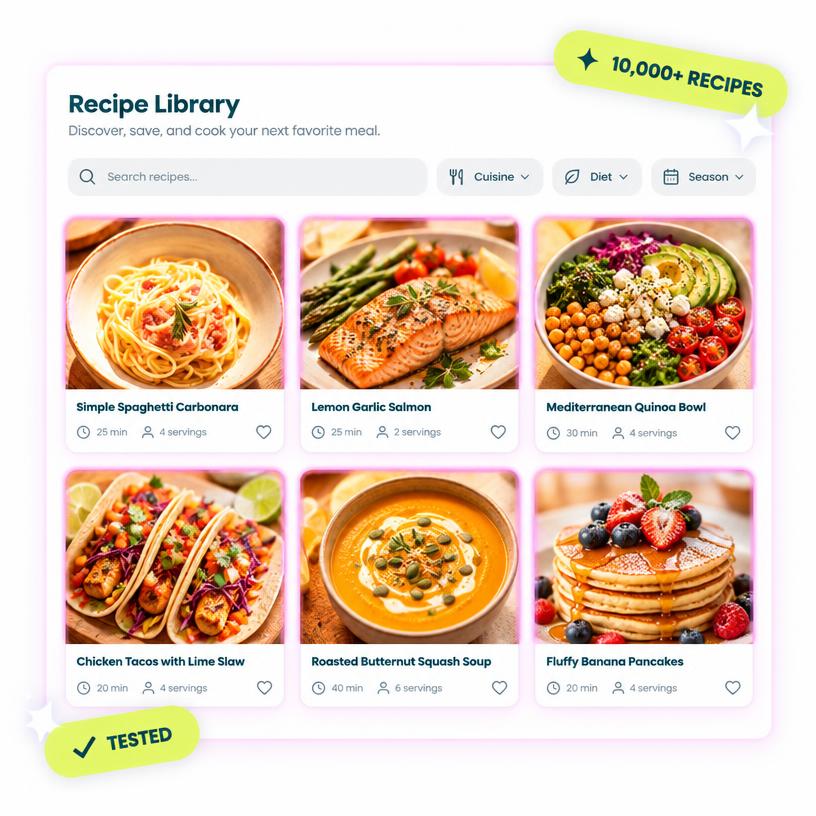
Today's consumers expect more from the websites and apps they use. They aren't just looking for products anymore. They want inspiration, guidance, and solutions that make everyday decisions easier.
For retailers and kitchen appliance brands, recipes offer a natural way to become part of that decision-making process. A well-integrated recipe experience can inspire customers, introduce new products, encourage repeat visits, and create valuable opportunities to connect digital content with commerce.
But building a recipe platform from scratch is no small undertaking. It requires a substantial library of quality-tested recipes, professional food photography, content management capabilities, ongoing editorial resources, and the technology to deliver an engaging digital experience.
This is where recipe licensing comes in.
Instead of investing years in developing an original recipe library, businesses can license existing, professionally developed recipe content and integrate it directly into their own website or app. Combined with white-label recipe technology, this makes it possible to launch a complete, branded cooking experience in a fraction of the time.
For mid-sized retailers and kitchen appliance manufacturers in particular, recipe licensing offers an attractive opportunity: access to the content and technology needed to compete with larger players, without the operational complexity of building everything in-house.
Recipe licensing is a commercial arrangement that allows a business to use an existing collection of recipes and associated content within its own marketing channels and digital platforms.
Depending on the agreement, this can include:
The biggest advantage is that businesses don't need to develop all this content themselves.
A retailer, for example, can license thousands of recipes and make them available through a dedicated recipe section on its website or mobile app. A kitchen appliance brand can curate recipes specifically designed for its product range, helping customers get more value from their appliances.
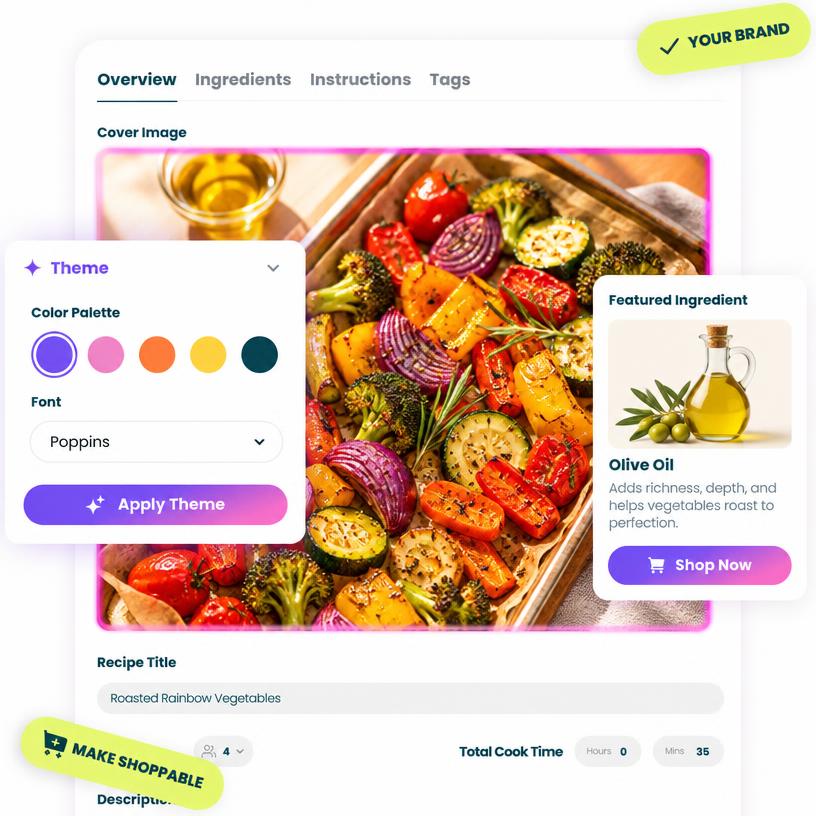
When combined with white-label technology, the licensed content can be presented as a fully branded experience, rather than sending customers to an external recipe website.
Large retailers and global appliance manufacturers may have the resources to develop extensive in-house culinary teams and proprietary recipe platforms. For mid-sized businesses, however, this investment can be harder to justify.
The challenge isn't simply creating recipes. It's maintaining a complete content and technology ecosystem that continues to deliver value over time.
Recipe licensing helps overcome several common barriers.
Developing a meaningful recipe library takes time. Recipes need to be created, tested, photographed, categorized, and regularly updated.
Licensing provides access to an existing content library, allowing businesses to skip much of the initial production process.
Instead of starting with an empty recipe database, retailers and appliance brands can launch with a substantial collection of ready-to-publish content.
When paired with an established recipe platform, this can significantly shorten the time between deciding to launch a recipe experience and making it available to customers.
Producing recipe content internally involves more than hiring a food writer. Businesses need recipe developers, food stylists, photographers, editors, testing facilities, and ongoing content management resources.
Licensing offers a more scalable alternative.
Businesses can access professionally produced content without taking on the full cost of developing and maintaining an equivalent library themselves.
Internal teams can then focus on what they do best: merchandising, brand positioning, customer experience, and promotional campaigns.
A successful recipe platform needs more than a handful of hero recipes.
Customers have different dietary preferences, cooking habits, budgets, skill levels, and household needs. A useful platform needs enough variety to serve these different audiences.
An established recipe library can provide immediate coverage across categories such as:
This breadth makes the experience more useful and creates more opportunities for customers to discover products and return to the platform.
Once a recipe platform is live, the work doesn't stop. New content needs to be published, seasonal collections need to be refreshed, and recipes need to be optimized for search and changing customer interests.
With a licensing partner that also provides content management capabilities, businesses can maintain a consistent publishing strategy without building a large editorial department.
This is particularly valuable for mid-sized organizations that want to offer a sophisticated digital experience while keeping internal resources focused on their core business.

For grocery retailers and specialty food stores, recipes are much more than editorial content. They are a direct connection between meal inspiration and product discovery.
From large retailers like Walmart and Amazon Fresh, to smaller retailers like Sunset Foods, SideChef has licensed recipe content to a variety of US-based retailers, each having their own set of content that fits well with their unique audience.
Traditional e-commerce experiences are largely product-led. Customers search for individual ingredients, browse categories, and add products to their basket.
Recipes introduce a different starting point: the meal itself.
Instead of searching for chicken, rice, and vegetables separately, a shopper can discover a complete chicken stir-fry recipe and purchase everything needed to prepare it.
This creates several opportunities for retailers.
One of the most valuable features of a branded recipe platform is the ability to connect ingredients directly to a retailer's product catalog.
With shoppable recipes, customers can:
This reduces friction between inspiration and purchase.
It also creates opportunities to promote private-label products, highlight seasonal offers, and introduce shoppers to products they might not otherwise discover.
Customers visit grocery websites and apps regularly, but many visits are purely transactional.
A recipe hub gives them another reason to engage with the retailer, even when they aren't ready to purchase immediately.
Weekly meal inspiration, seasonal collections, budget-friendly recipes, and personalized recommendations can turn a retailer's digital platform into a more useful everyday destination.
Over time, this helps build stronger customer relationships and creates more opportunities to influence future purchasing decisions.
Licensed recipes can also be distributed beyond a dedicated recipe section.
Retailers can activate the same content across:
This makes recipe licensing a versatile content investment rather than a standalone website feature.

For kitchen appliance manufacturers, the opportunity is slightly different.
Customers don't just buy an appliance; they buy the promise of better cooking, greater convenience, and new possibilities in the kitchen.
Yet many consumers only use a fraction of the capabilities their appliances offer.
An air fryer might be used for frozen fries and chicken nuggets. A multi-cooker might sit unused between a few familiar meals. A smart oven might offer dozens of cooking functions that customers never fully explore.
Recipes can bridge this gap.
By integrating a recipe library directly into their website or mobile app, appliance brands can demonstrate what their products can actually do.
A branded recipe platform can organize recipes around specific appliance categories, cooking functions, and product features.
For example:
This transforms product features into practical use cases.
Rather than simply explaining that an appliance has an air-fry function, the brand can show customers exactly what they can prepare with it.
For appliance brands, the customer journey shouldn't end when the product is delivered.
A recipe experience provides a reason to keep using the brand's digital ecosystem long after the initial purchase.
Customers can discover new recipes, save favorites, explore cooking techniques, and learn how to use additional appliance functions.
For connected appliances, recipe content can become even more valuable when integrated with smart cooking technology.
Imagine selecting a recipe in the brand's app, following guided instructions, and sending the recommended cooking settings directly to a compatible oven.
This creates a much more connected experience between content, product, and everyday cooking.
In a competitive appliance market, hardware specifications alone are not always enough to differentiate a brand.
A compelling digital cooking experience can become part of the overall product proposition.
Brands that offer useful recipe content and connected cooking features give customers an additional reason to choose their ecosystem, engage with their products, and return to their app.
Not all recipe libraries are created equal. Choosing the right licensing partner is about more than securing access to a large number of recipes.
Businesses should consider the following elements before committing to a solution.
Look for professionally developed, tested recipes with reliable instructions, accurate ingredient quantities, and appealing photography.
The library should offer enough variety to support your audience, product assortment, and long-term content strategy.
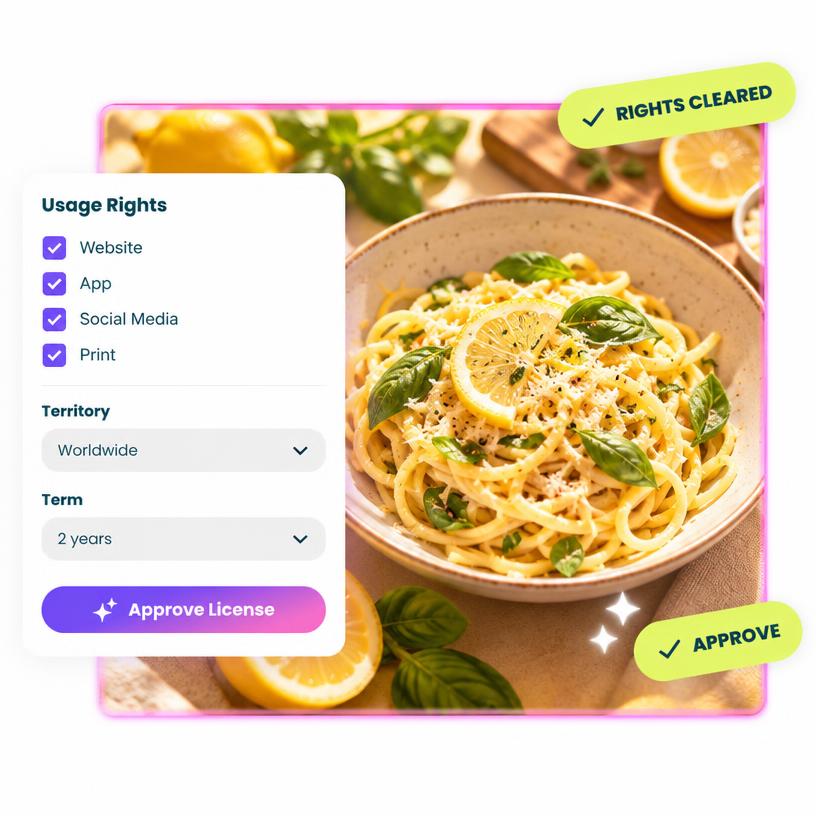
Make sure the licensing agreement supports your intended business model.
Can you publish recipes on both your website and mobile app? Can you use images in email campaigns or social media? Are there geographical or language restrictions?
The more flexible the agreement, the easier it becomes to activate recipes across different marketing channels.
Your recipe experience should feel like a natural extension of your existing digital ecosystem.
Look for solutions that support API integrations, embeddable recipe widgets, or a fully branded recipe platform.
The ideal setup should work with your existing website, mobile app, product catalog, and e-commerce infrastructure.
A recipe library is also a long-term SEO opportunity.
Every recipe creates an additional entry point for customers searching for specific dishes, ingredients, dietary needs, and cooking inspiration.
Make sure your licensing partner can provide structured recipe data, SEO-friendly page structures, descriptive metadata, and support for Recipe schema markup.
Google's documentation explains how structured recipe data can help search engines understand recipe content and make pages eligible for enhanced recipe search appearances. https://developers.google.com/search/docs/appearance/structured-data/recipe
If your business operates across multiple markets, localization is essential.
Recipes should reflect local ingredients, measurement systems, terminology, and food preferences, rather than simply translating the original text.
Personalization capabilities are also valuable, allowing users to discover recipes based on dietary preferences, cooking habits, previous interactions, and relevant products.
There is another reason why investing in structured recipe content is becoming increasingly relevant for retailers: AI-powered shopping assistants.
One of the biggest opportunities in digital grocery retail is solving a simple but persistent customer question:
"What's for dinner tonight?"
Traditionally, customers have needed to figure out what they want to cook, find a recipe, identify the ingredients, and then search for each product individually.
AI shopping assistants can bring these steps together.
A customer might ask:
"I need a quick, healthy dinner for a family of four. Something with chicken, under 30 minutes, and preferably using ingredients that are on sale."
An AI assistant could recommend relevant recipes, adapt serving sizes, identify the required ingredients, match them to products in the retailer's catalog, and create a ready-to-shop basket.
But for these experiences to be genuinely useful, AI needs access to reliable culinary information.
A licensed recipe library can provide the structured content foundation behind these interactions.
Instead of relying entirely on AI-generated recipes, retailers can use professionally developed and tested recipes as a trusted source for recommendations.
With the right integration, an AI assistant can access information such as:
This allows the assistant to make more relevant recommendations and connect them to products that the retailer actually sells.
The combination of licensed recipes, product catalog data, inventory information, and customer preferences creates a much more useful shopping experience.
The real opportunity is connecting conversational discovery to commerce.
A shopper asks what to cook. The assistant suggests a few suitable recipes. The customer selects one, and the assistant builds a shopping list using available products, current promotions, and relevant alternatives.
The customer can then review the basket and proceed to checkout.
This is already becoming a practical direction for grocery retail. In September 2026, Instacart introduced Clementine, an AI shopping assistant designed to turn conversations, recipes, and grocery lists into personalized shopping carts. Its enterprise Cart Assistant also brings branded AI shopping experiences to retailer storefronts. https://investors.instacart.com/News/news-releases/news-details/2026/Meet-Clementine-Instacarts-AI-Shopping-Assistant-That-Takes-Whats-for-Dinner-Off-Your-Plate/
For retailers, this represents an important shift: competing not just for product searches, but for the customer's meal-planning decision itself.
And that decision starts with inspiration.
For mid-sized retailers, having a structured, high-quality recipe library already available can provide a valuable head start when developing these AI-powered experiences.
Of course, licensed content alone doesn't create an AI shopping assistant. It needs to be connected to suitable AI technology, product catalog data, inventory systems, and commerce functionality. But it provides an important foundation for making those interactions more accurate, relevant, and actionable.
The good news is that launching a branded recipe platform doesn't have to mean starting a large technology or content development project.
With the right partner, businesses can combine licensed recipe content with an established recipe platform and customize the experience around their brand.
At SideChef, we help retailers and kitchen appliance brands bring these experiences to life through a combination of recipe licensing, content solutions, and recipe platform technology.
Our solutions can include:
Whether you're a grocery retailer looking to improve your digital shopping experience or an appliance manufacturer looking to make your products more engaging, recipe licensing offers a practical way to get started.
Building a successful recipe platform requires the right combination of content, technology, and customer experience.
For mid-sized retailers and kitchen appliance brands, recipe licensing offers a way to access these building blocks without taking on the cost and complexity of developing everything internally.
It provides an opportunity to launch faster, expand content coverage, create more valuable digital experiences, and connect cooking inspiration with real business outcomes.
And as AI-powered shopping assistants become more integrated into the retail journey, structured recipe content will become an increasingly valuable asset for helping customers move from deciding what to cook to actually buying what they need.
The question is no longer whether recipes belong in your digital strategy. It's how quickly you can make them work for your business.
Ready to launch your own branded recipe experience? Partner with SideChef to explore recipe licensing, white-label recipe platforms, and integrated cooking experiences for your business.
Explore SideChef's Recipe Platform Solutions or get in touch with our team.


Subscribe to the SideChef Business Newsletter

